

 ICES
Many marketing reports are full of numbers that look impressive but say little about growth. To measure marketing ROI properly, look past them. Views, likes and followers matter, but only as steps towards something bigger: customers, revenue and loyalty.
- Separate attention, action and business metrics, and make decisions on business metrics.
- Know your cost per acquisition, return on ad spend, conversion rate, average order value and lifetime value.
- Set up tracking before you spend, including UTM links, pixels and creator codes.
- Use one shared dashboard reviewed on a fixed schedule.
The basic ROI formula
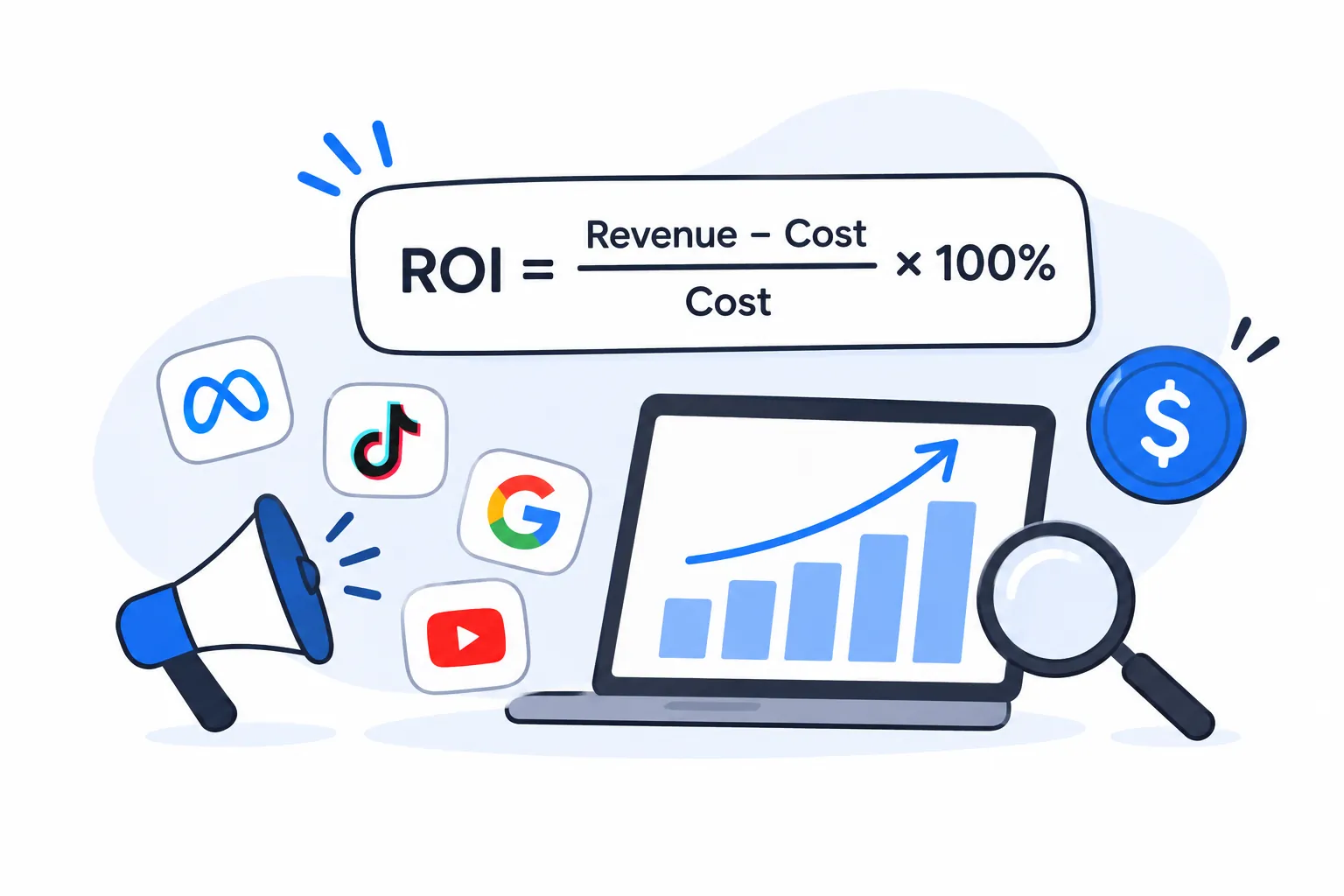
Marketing return on investment compares the profit generated by marketing with what you spent on it. A simple version is: (revenue from marketing minus marketing cost) divided by marketing cost. Using gross profit instead of revenue gives a more honest view, because it accounts for product and delivery costs.
Understanding attribution
Customers rarely buy after a single touchpoint. They may see a creator video, search on Google, click an Instagram ad and then buy on a marketplace. Attribution models decide how credit is shared between those touchpoints. No model is perfect, so combine platform data with simple tests, such as pausing a channel in one region, to see what really drives sales.
Every platform claims credit. Your sales data is the referee.
Do not ignore brand metrics
- Brand search volume: are more people searching for your name?
- Share of voice: how often are you mentioned compared with competitors?
- Sentiment: are comments and reviews becoming more positive?
- Repeat purchase rate: are customers coming back?
These numbers move slowly, but they explain why performance marketing gets easier or harder over time.
Running a monthly performance review
Look back
Compare results with targets and with the previous period.
Explain
Identify what drove the changes, such as creative, offers, seasonality or competition.
Decide
Agree what to stop, continue and scale.
Plan
Set targets and tests for the next month.
Keep the review short, focused and regular. Teams that review results together every month make faster, better decisions than teams that only look at reports at the end of a campaign.
How ICES can help
ICES builds marketing dashboards and automated reporting that combine ads, social media and sales data. See our Intelligence services.
Frequently asked questions
What is a good marketing ROI?
It depends on your margins and business model. A campaign can look strong on revenue but still lose money if margins are thin, so always compare results with gross profit.
What is the difference between ROI and ROAS?
ROAS, or return on ad spend, compares revenue with ad spend only. ROI compares profit with the total marketing investment, including production, fees and tools.
How can we measure the ROI of influencer marketing?
Use affiliate links, discount codes and UTM links for each creator, track sales and traffic, and compare with the total cost of fees, products and management.
Not sure what your marketing is returning?
We can review your tracking and suggest a simple dashboard.